I hate this one so much. I was angry the entire runtime.
Spoilers. CW: mentions slurs, sexual situations, and incidents of racism
I wasted enough of my life already watching the film, so I am going to try to keep this review short. I am also going to embed another review that covers several points in more depth and to a degree which I cannot since I am not a Black woman. I think the video is worth your time (thanks for sharing, Destiny).
Now on to a few things I haven’t seen anyone else mention, starting with the source material.
Paul Thomas Anderson either failed to do the book justice or he failed to modernize Pynchon’s post-Nixonian hippies and emerging Reaganites into Gen Xer wannabe Panthers and pre/post-911 border town military.
I guess I’m glad that I went into the film unawares of it being adapted from Thomas Pynchon’s Vineland (1990), although learning that fact helped clarify a ton about what my husband and I watched; however, had I known it was Pynchon, I doubt I would have bothered. Paul Thomas Anderson’s films are hit-or-miss for me with the adaptations all landing in open ocean.
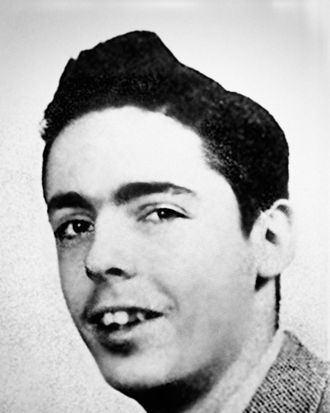


While many critics use terms like “loosely-based” to describe Paul Thomas Anderson’s adaptation, I wonder what he changed besides the names and the mob boyfriend bit. In the novel, the daughter is named “Prairie,” aged 14, which is about as on-the-nose racist for a mixed character in a PoMo western as you can get, despite critics reading the name as a reference to a Tibetan prayer wheel or homage to a river. Bob’s mirror is Zoyd Wheeler, Perfidia Beverly Hills is Frenesi Gates, and Col. Lockjaw is Brock Vond/Hector Zuñiga. Deandra is possibly based on the character Ditzah who, in the novel, tells Prairie the story at an unknown future time. Missing are “Blood” and “Vato,” the tow-truck drivers, but I think viewers will survive. Instead, we get a few additional members of their group (macguffins) who have a couple of racially-stereotypical dialog lines apiece.
Ironically, a few of the most popular and oft-quoted lines from OBAA came from NYC rapper Junglepussy who played the eponymous character and whose music inspired Anderson’s writing.
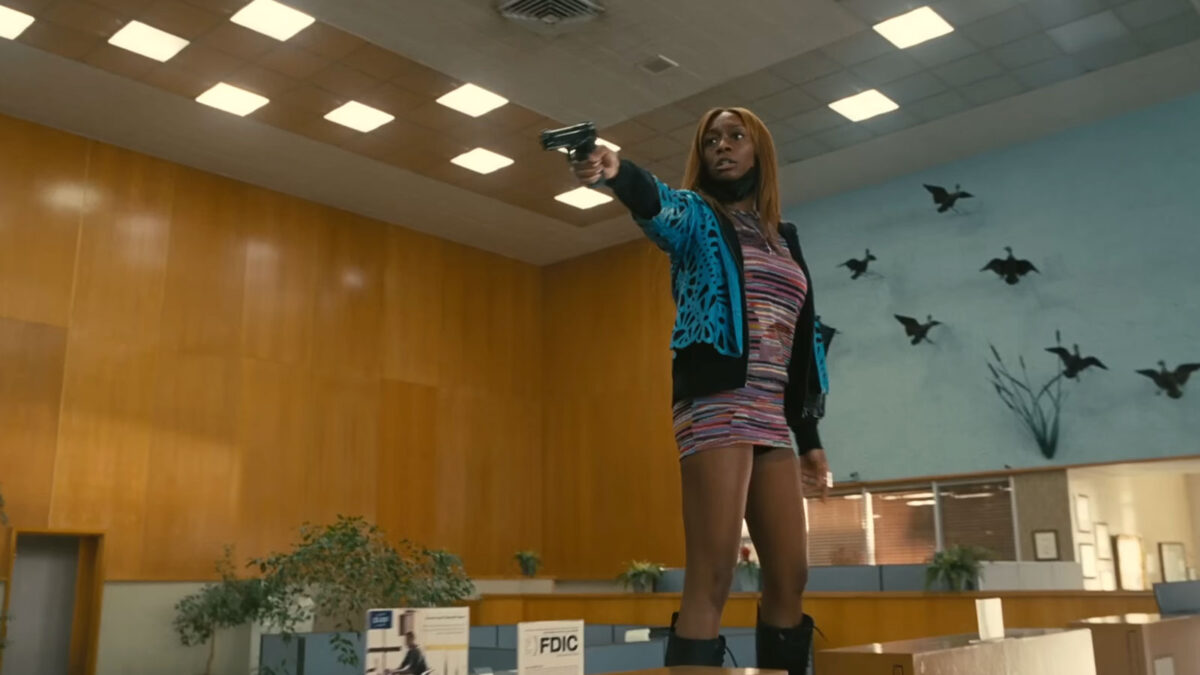
The core story appears nearly the same, but since I haven’t read the book, I can’t speak for details beyond the excerpts I found: there is a race to find Bob/Hector and Willa/Prairie, the mother abandons her family after ratting on everyone, an obsessed federal agent with a bloated budget is the primary antagonist, and there’s a secret society somehow involved.
I think the film would have worked better as a true-to-period piece because Pynchon’s satire was specific to Nixon/Reagan and the white Boomer generation’s failure to pick up their parents’ revolutionary torch. I can’t call Anderson’s film satire because it isn’t.
OBAA is counter-revolutionary pro-state propaganda that depicts 90s-era direct action groups as disorganized, unfocused, and hypocritical. True for the largely-WASP hippie movement, but not the Black, Indigenous, queer, or disabled organizing I remember from my adolescence.
Pynchon’s novel includes his usual homophobia and misogyny, and I expected it from an Anderson film. But I was not expecting the hypersexualized misogynoirist caricature of a Black woman that is Perfidia Beverly Hills. Check out the review I shared at the beginning to learn more. I also recommend Brooke Obie’s review: “One Fetish After Another: PTA Exploits Black Women and Averts Revolution” (2025) and Ellen E. Jones’s, “Jezebels, Race Kink, and Cardi B.: In One Battle After Another Black Women are Still Stereotypes” (2025).

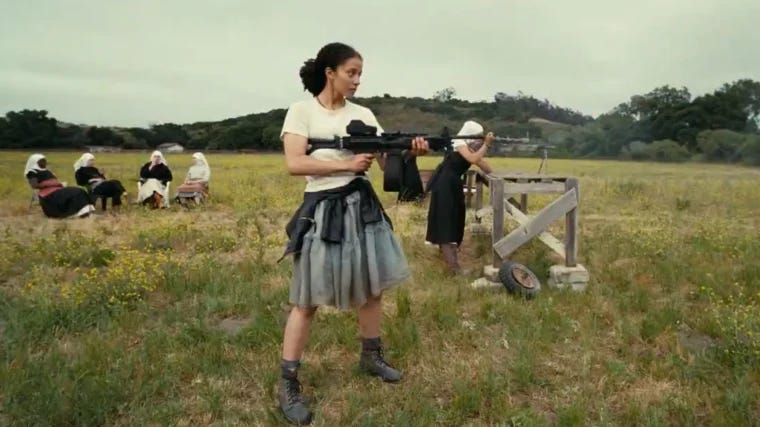
When read as a postmodernist western, OBAA checks all the boxes.
I could write an entire review just on the Indigenous and “Latino” story depicted in the film, but it’s honestly not worth the time it would take to type. Just know you don’t see anything new or approached from a revolutionary perspective. Even the characters given names are mere background decoration.
Leonardo DiCaprio’s Bob/Ghetto Pat character could have been lifted from Dances-With-Wolves (1990) or Avatar (2009) and he does remind me of several Gen Xer parents from when I was growing up in the 90s, but overall he can be read as a static stand-in for average white cis men who are useless and rely on the oppressed folks around them for every single thing in their lives. His ad nauseum, spitting use of “ese” and “homie,” combined with slurs like “retard” and “moron,” and his absolute shit parenting make him irredeemable. I kept hoping we’d get a Departed (2006) moment.
Alas… since this is a western, we can use John Ford’s framing: Perfidia would have been the seductive Squaw who lures the hero away from his civilized life and intends to be his ruin; their daughter would be the Indian Princess. See: John M. Coward. In accordance with settler colonial doctrine like Manifest Destiny, the mixed child and the white man survive while everyone around them dies or sacrifices themselves. See: the Myth of the Vanishing Indian and the Half-Breed trope.
In one scene, Bob runs away from police while shouting leftist buzzwords and condemning settler colonial racial capitalism. It is played off as a joke which is accurate, in a sense, considering DiCaprio’s love for yacht parties in St. Barthes and his “eco-friendly” hotel built on stolen Palestinian land.
Finally, I wanted to comment on the framing of male sexual assault in this film.
Anderson does not trust the audience to understand his work, so we are spoon-fed everything from the plot to political message to character motivation. There is no subtlety in OBAA which means The Bad Guy, Col. Lockjaw, is a cartoonish villain and we are reminded in each of his scenes.
I don’t have it in me to do another analysis of facial difference or disability as shorthand for evil making a resurgence in Hollywood, but look at this. He didn’t need to be physically disfigured, blinded, and disabled for the audience to understand Lockjaw is evil, beyond redemption, and deserves bad things.
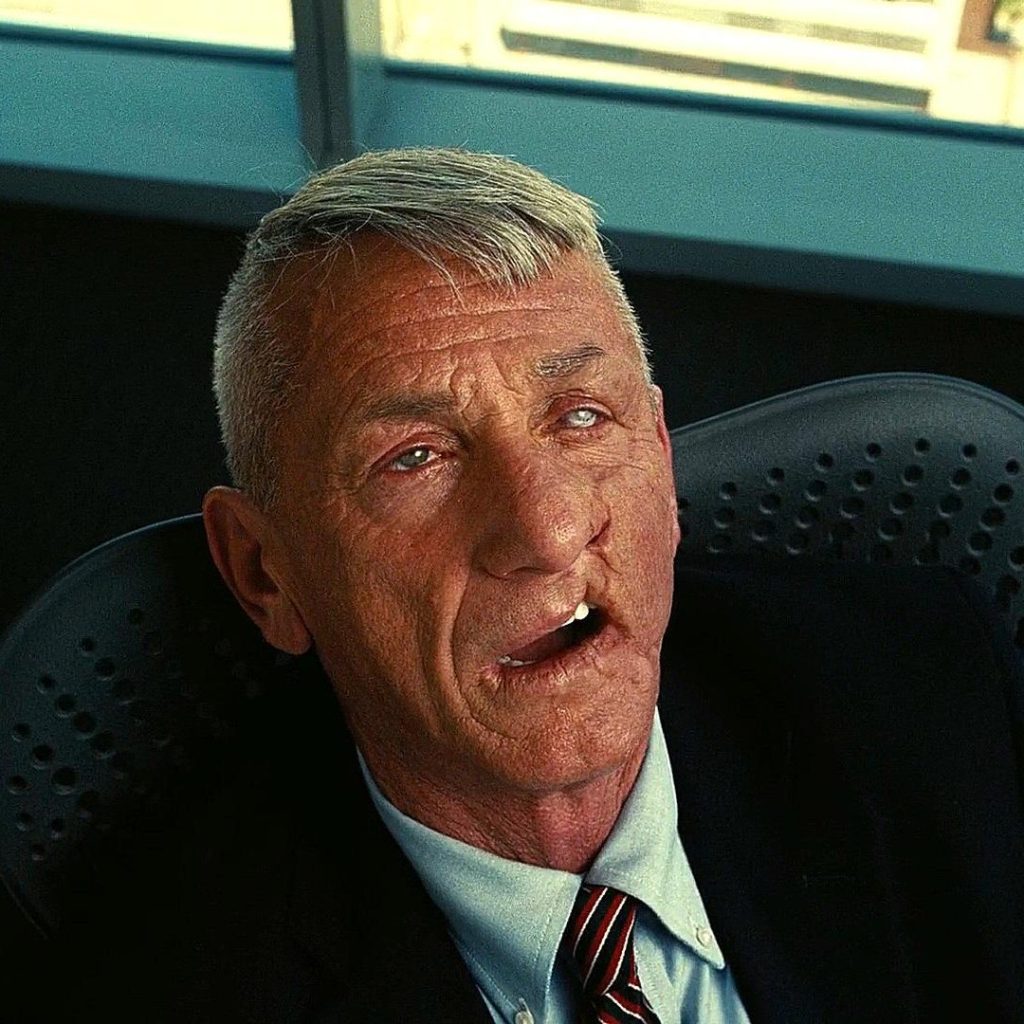
But what he didn’t deserve was repeated sexual humiliation and possible assault.
In a scene during the opening act, Perfidia forces Col. Lockjaw to become erect at gunpoint before being marched into a holding pen. The two engage in a sadomasochistic-coded affair with that includes specific boundaries to qualify her for quid pro quo under his protection; but out of all possible moments during sexual encounters Anderson could depict on-screen, audiences witness Perfidia start to penetrate Lockjaw with his service pistol. Both sexual acts were shot and edited to be humorous, including punchlines and camera panning, so what is the intended message?
Yes, he is a vile man who objectifies, stalks, and harasses her. Yes, he says disgusting racist things. But the second encounter involving the gun is also framed as a surprise which makes the scene harder to read as fully consensual. It also plays into Frantz Fanon’s (among others) theory that colonizers fear abolitionism and social equity because they assume the formerly-oppressed will replicate their systemic violence. This is what folks mean when they say the film is a white man’s sexual fantasy and counterrevolutionary. OBAA argues that Perfidia is “just as bad” or “worse” than the evil white supremacists.
Col. Lockjaw is again the target of sexual humiliation during his final scene in which the Christmas Adventurers’ Club interviews him regarding the interracial relationship and possible offspring. He lies to the group of men and claims Perfidia sexually assaulted and drugged him to which they initially reply in a confused manner until one man proclaims, “a semen demon!?” The character might be lying, but the situation is again played for laughs, including the men asking questions about how a small woman could overpower such a strong soldier. Only the rimshot was missing.
And that’s One Battle After Another (2025), folks. It’s garbage. I wasted 2.5 hours of my life so you don’t have to.