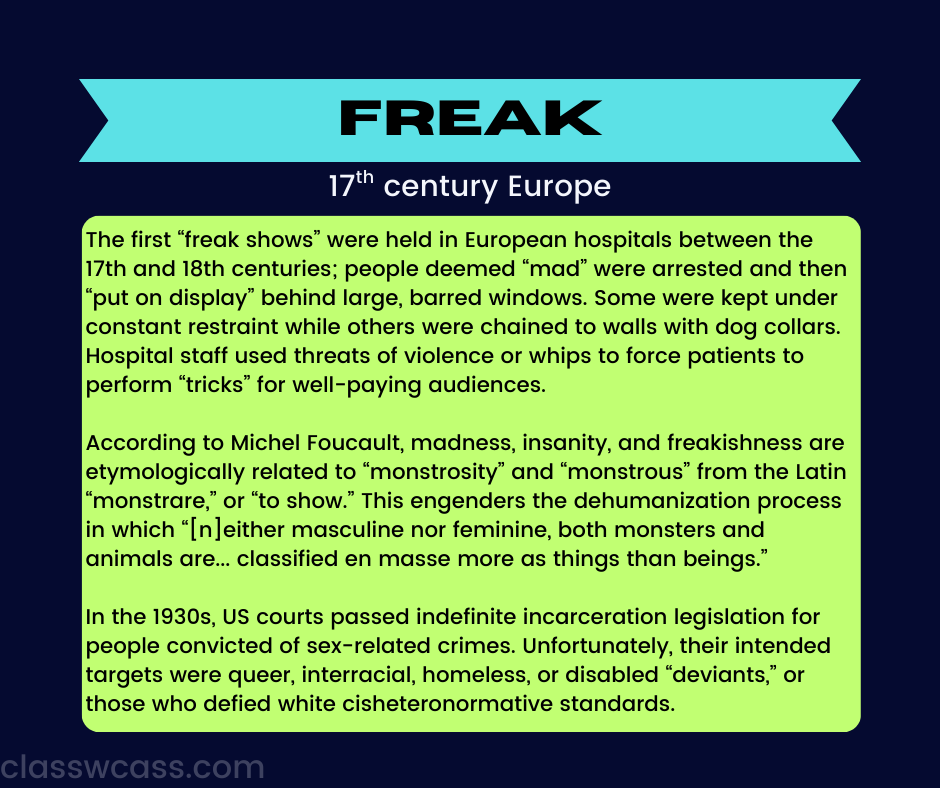
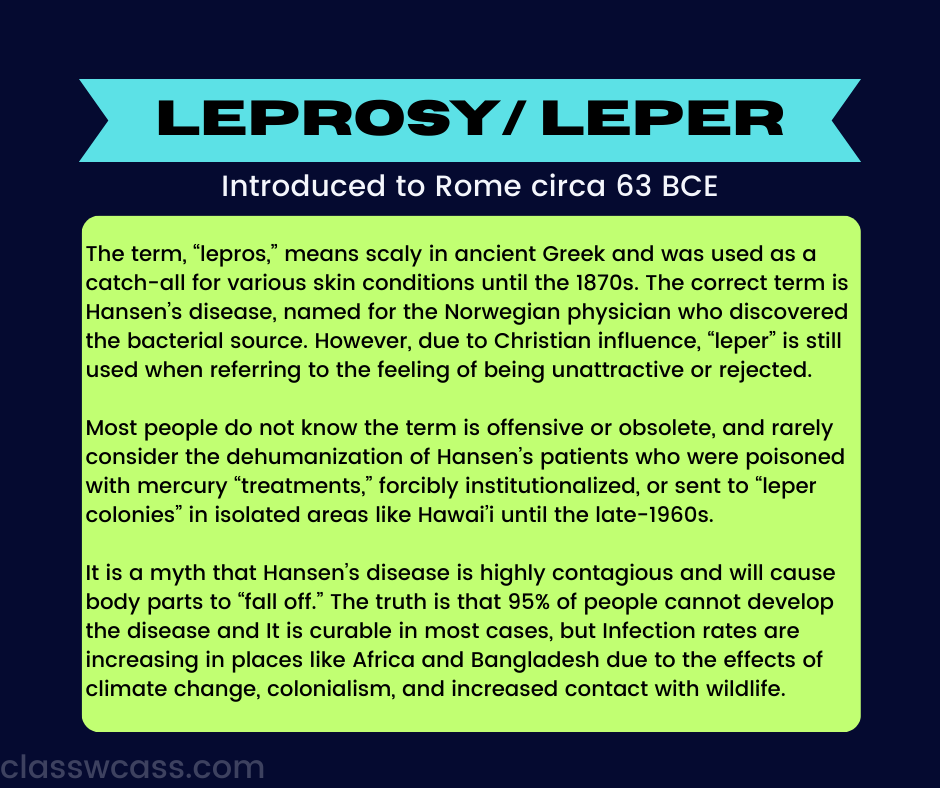
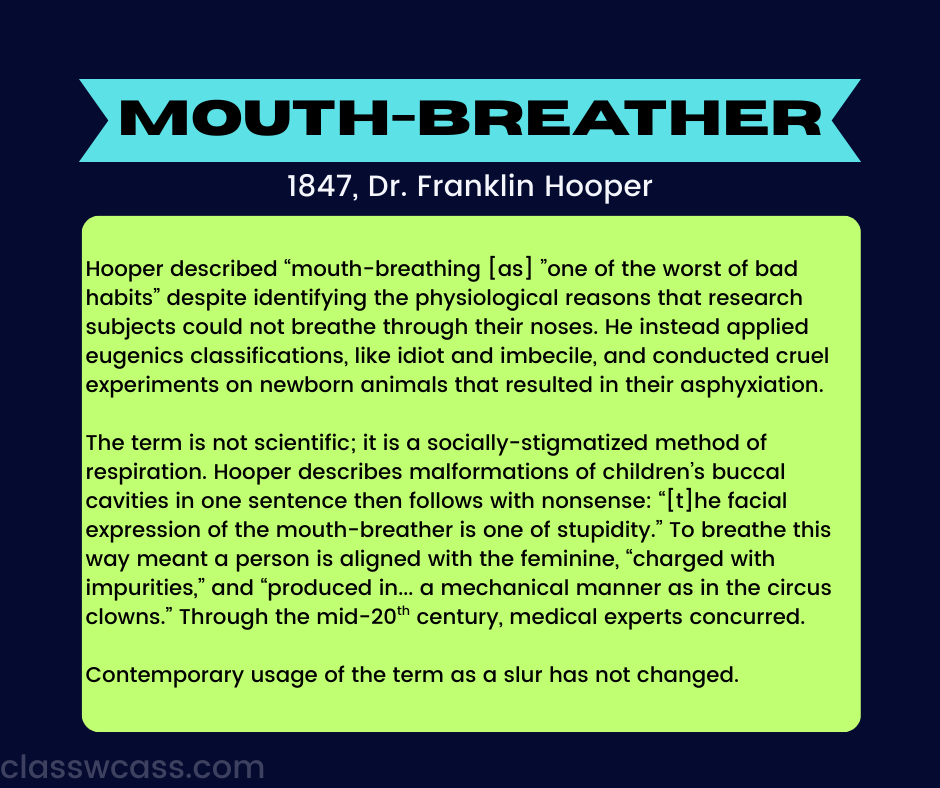
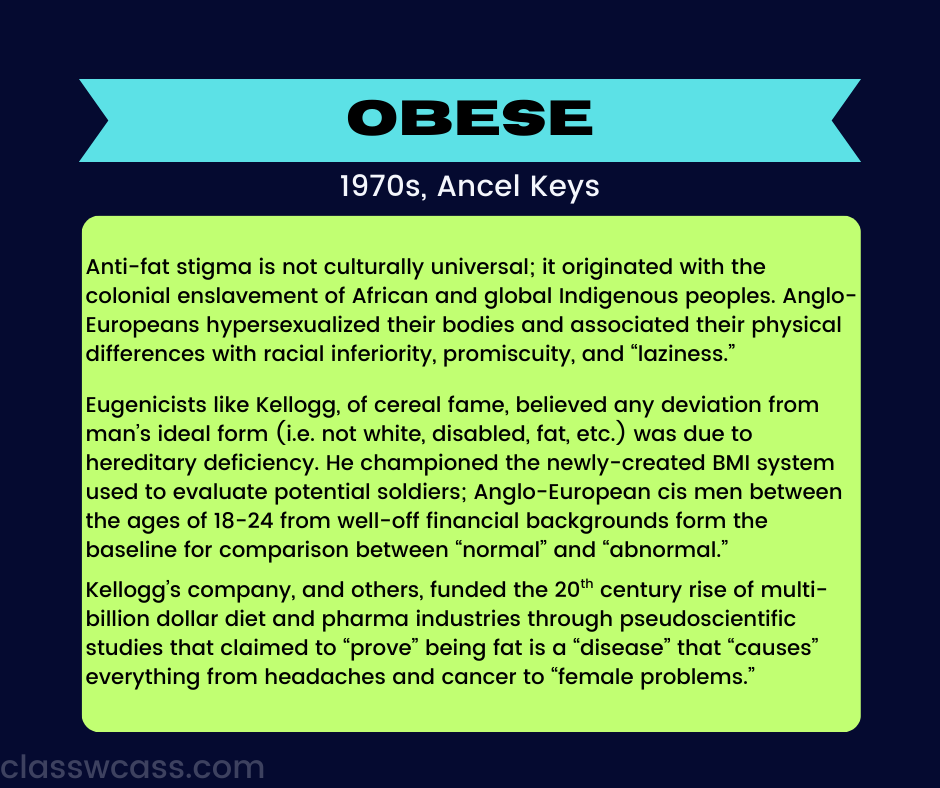
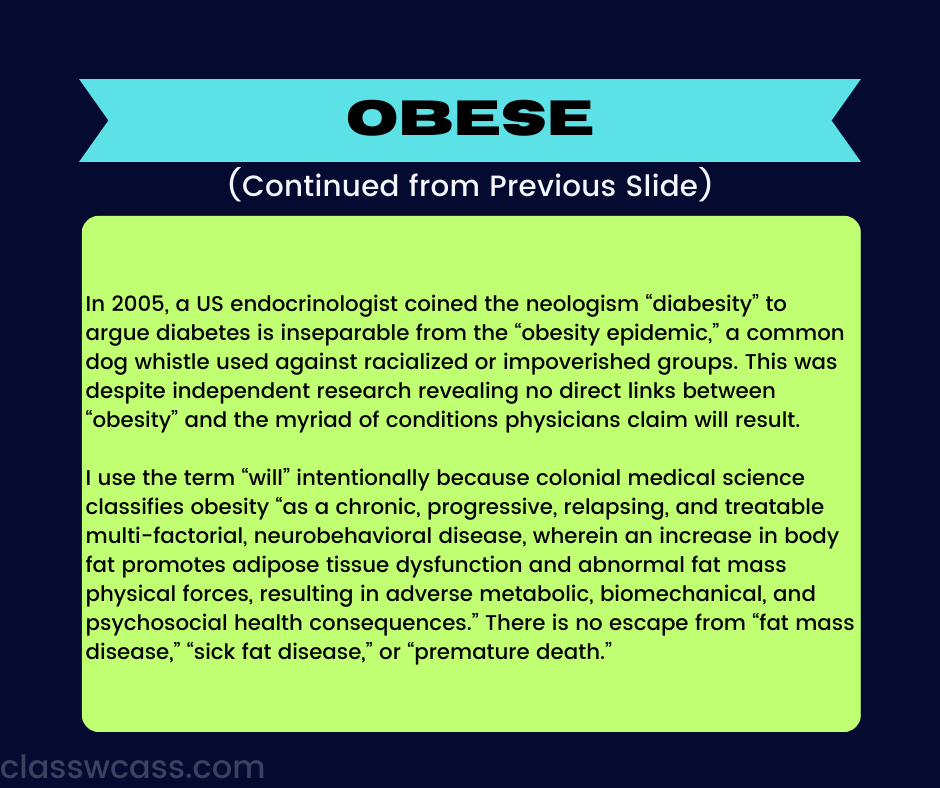
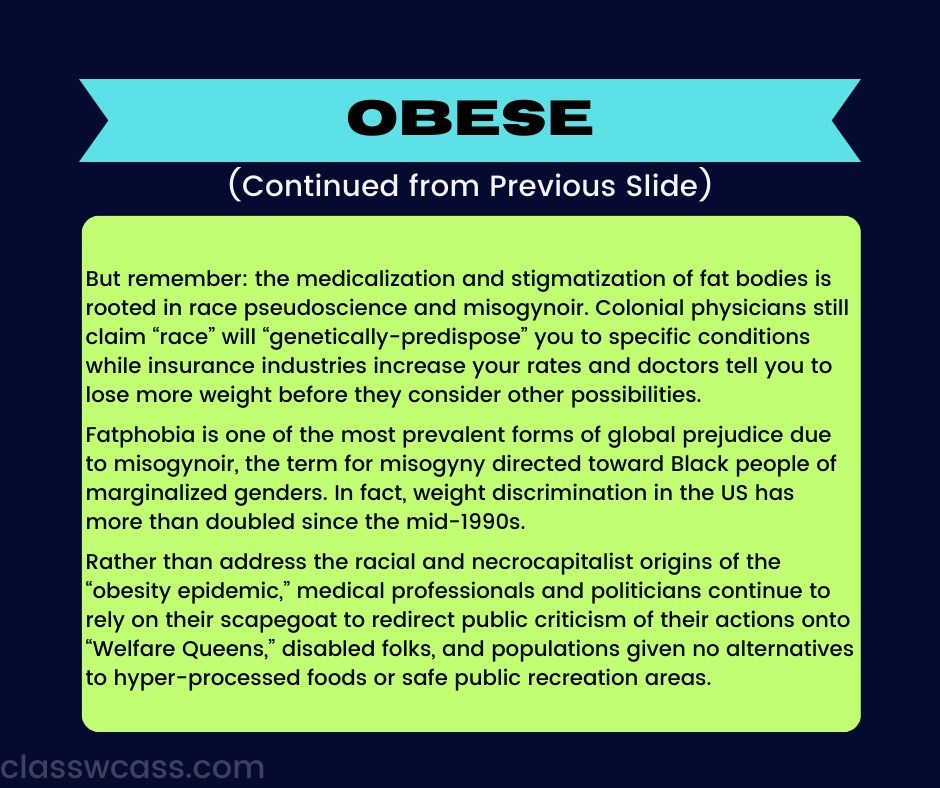
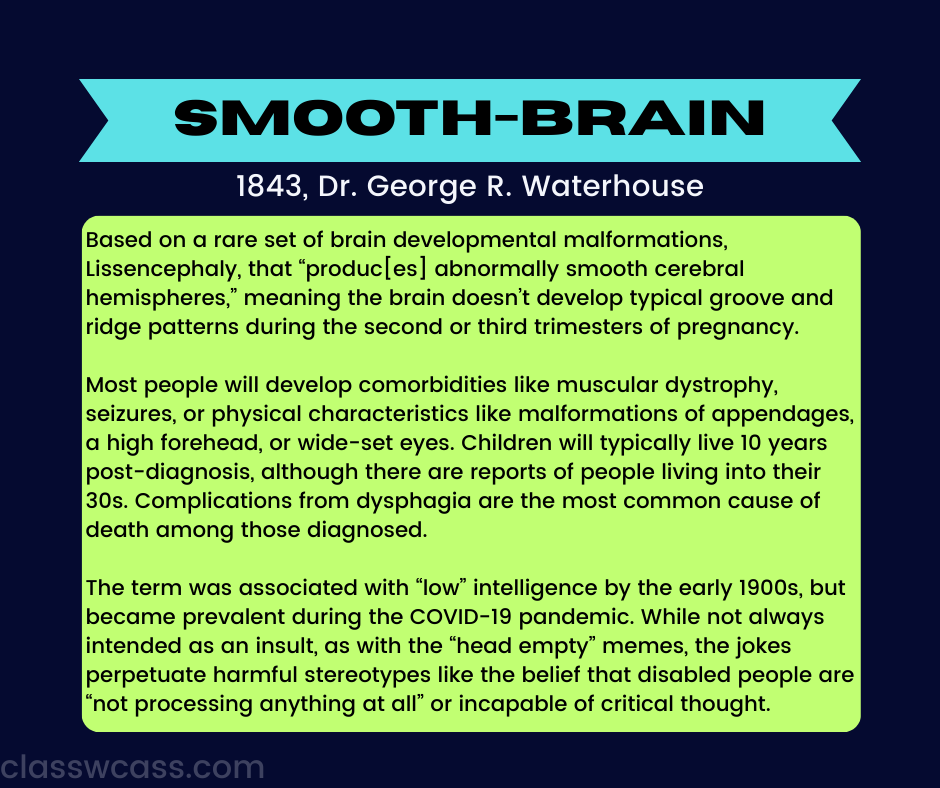
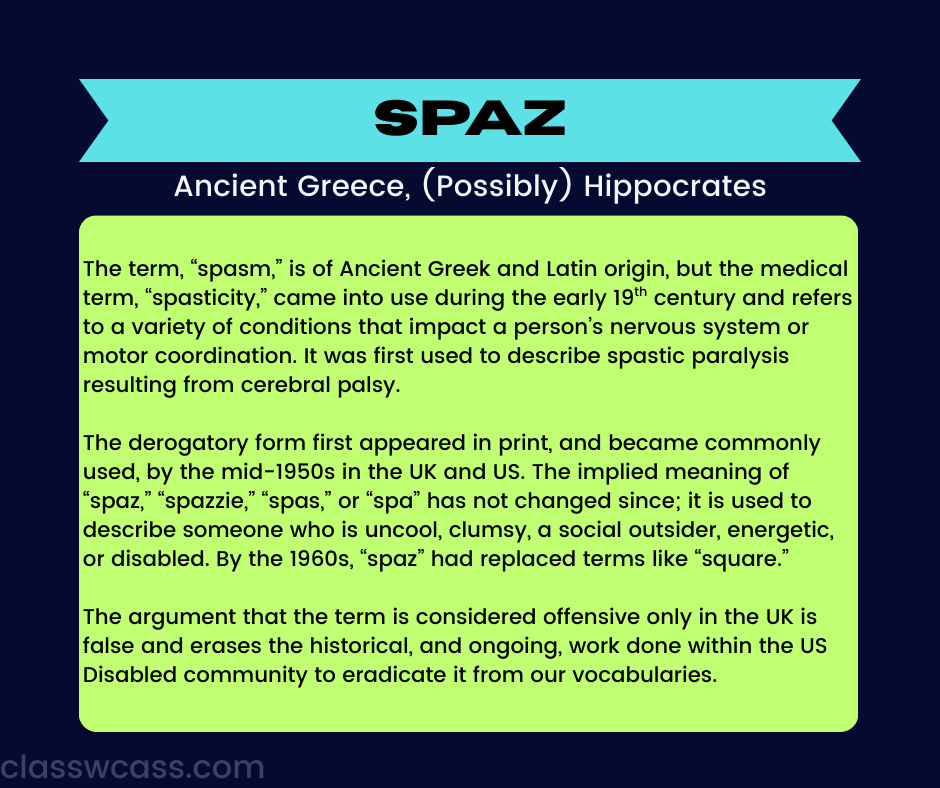
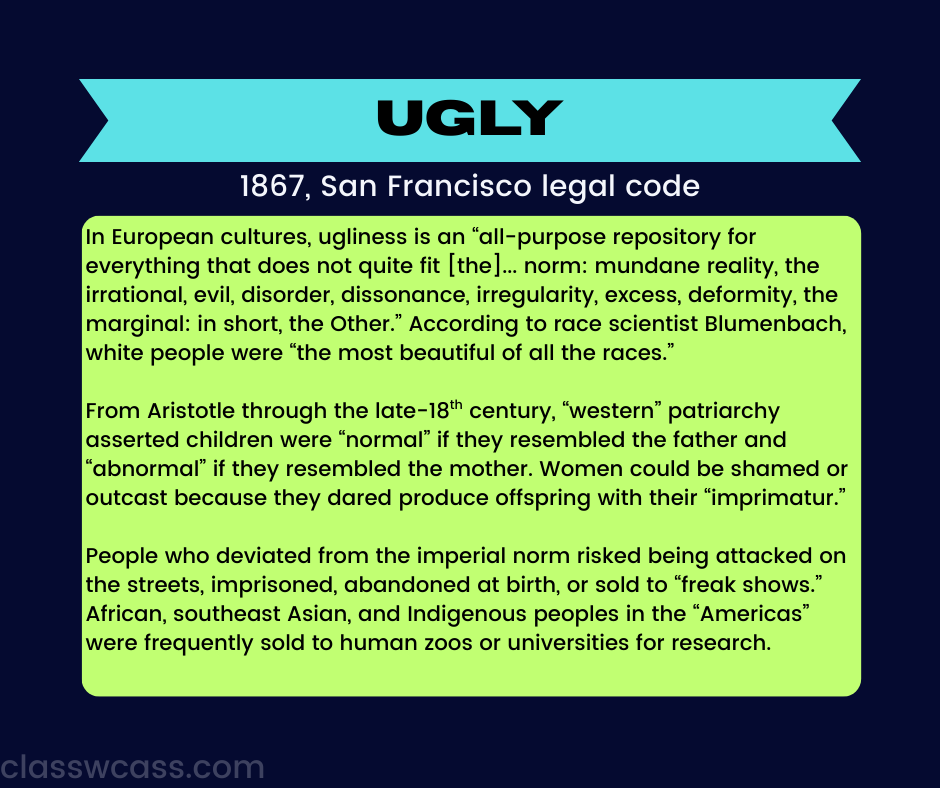
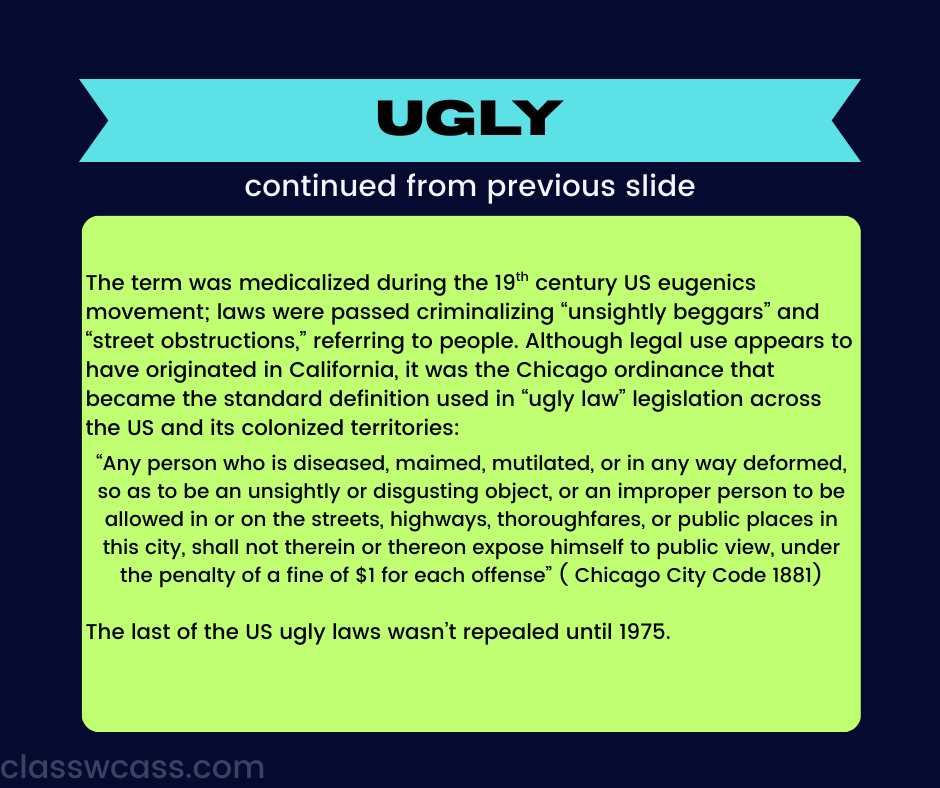
This set includes eight different terms with their original meanings, common use, and sociopolitical implications. The next set will focus on mental health and hospital jargon.
Removing oppressive, racial capitalist language from our vocabularies is a necessary part of the decolonization process.
When someone claims these terms are neutral or their use is inconsequential, what they are doing is saying they value individual linguistic expression more than the very lives of disabled people.
While you might not know the history of a slur, choosing to use it after being told it is offensive only aligns yourself with our oppressors. It tells the targets of those terms that you are not safe, an ally, or prepared to put in the work decolonization and abolition require.
Not a single one of these terms is neutral and although some people in our communities have worked to “reclaim” slurs, it is never okay for someone who is not disabled or from the marginalized target group to casually use the term today.
Slide Gallery
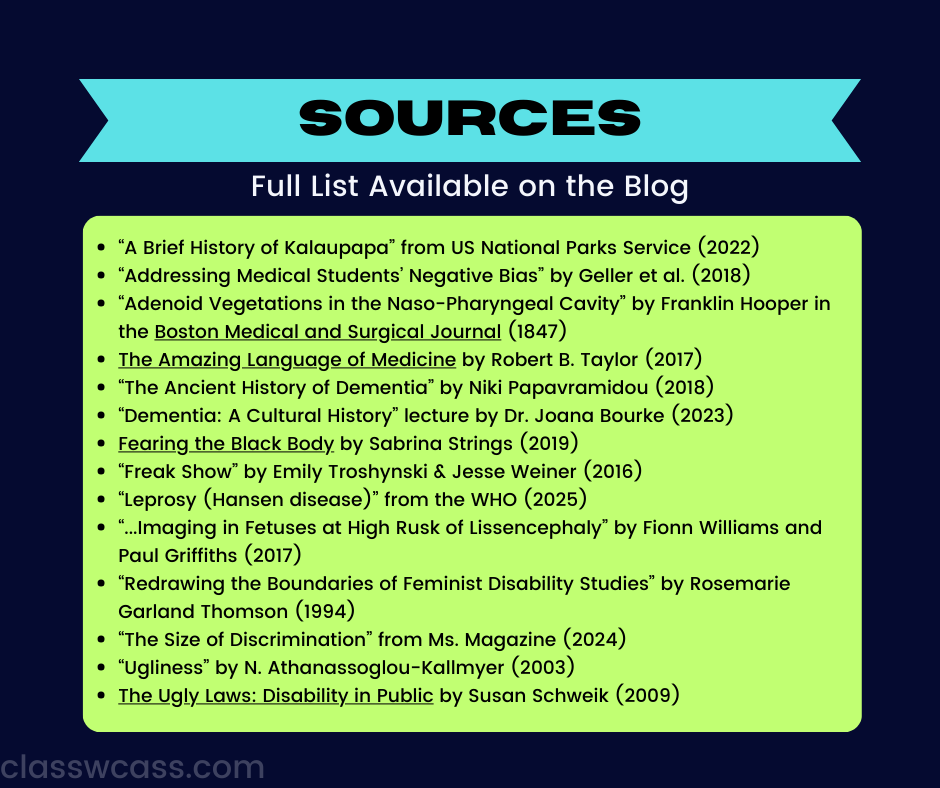
Complete List of Sources
Arranged by Subject.
General
- The Amazing Language of Medicine by Robert B. Taylor (2017)
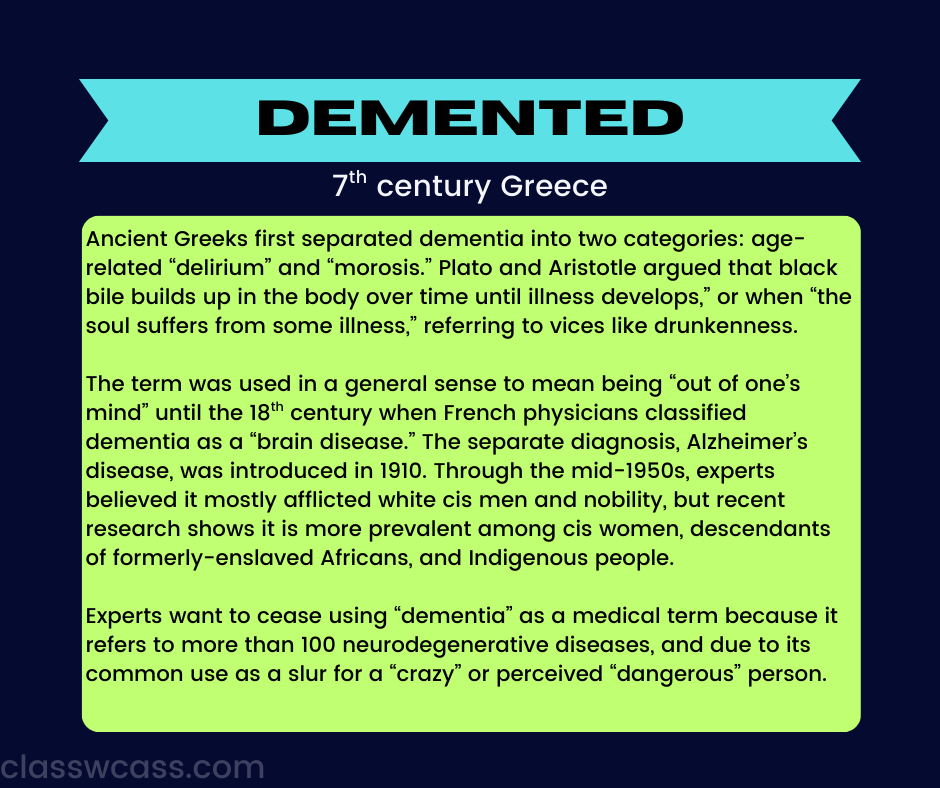
Demented
- “The Ancient History of Dementia” by Niki Papavramidou (2018)
- “Dementia: A Cultural History” lecture by Dr. Joana Bourke (2023)
- “History of Dementia” by Frédéric Assal (2018)
- The Initiative to Change the D-Word
Freak
- “Freak Show: Modern Constructions of Ciceronian Monstra and Foucauldian Monstrosity” by Emily Troshynski & Jesse Weiner (2016)
- “Redrawing the Boundaries of Feminist Disability Studies” by Rosemarie Garland Thomson (1994)
Leprosy
- “About Leprosy (Hansen’s Disease)” from the Center for Disease Control (2025)
- “A Brief History of Kalaupapa” from US National Parks Service (2022)
- “Leprosy (Hansen Disease)” from the WHO (2025)
Mouth-Breather
- “Adenoid Vegetations in the Naso-Pharyngeal Cavity” by Franklin Hooper in the Boston Medical and Surgical Journal, p. 193-7 (1847)
Obese
- “Addressing Medical Students’ Negative Bias Toward Patients With Obesity Through Ethics Education” by Geller and Paul Watkins (2018)
- “Association of Genetic Variants Related to Gluteofemoral vs Abdominal Fat Distribution With Type 2 Diabetes, Coronary Disease, and Cardiovascular Risk Factors” by Luca A. Lotta et al. (2018)
- “Body mass index and body composition in Black and Female individuals. Race-relevant or racist? Sex-relevant or sexist?” by Harold Edward Bays et al. (2022)
- Fearing the Black Body: The Racial Origins of Fat Phobia by Sabrina Strings (2019)
- “The Really Old, Racist, and Non-Medical Origins of the BMI” by Maani Truu (2022)
- “The Size of Discrimination: Racism and Bias in the Fight Against the ‘Obesity Epidemic’” by Gloria Orrego-Hoyos, Natalia Acevedo Guerrero, and Michele Goodwin (2024)
Smooth-Brained
- “In Utero MR Imaging in Fetuses at High Rusk of Lissencephaly” by Fionn Williams and Paul Griffiths (2017)”
- “Man and Other Animals” from Anthropology: An Introduction to Man and Civilization, p. 35 by Edward B. Tylor (1904)
- “Observation on the Classification of Mammalia” by G.R. Waterhouse (1843)
- “On the Classification of Mammalia” from Boston Medical and Surgical Journal, p. 818-9 (1863) by T.H. Huxley
- “Why ‘Head Empty’ Memes are Dominating 2020” from Wired (2020)
Spaz
- “A Brief History of ‘Spaz'” by Benjamin Zimmer (2006)
- “Origin and History of Spaz” from Online Etymology Dictionary
- “Spaz is an Unacceptable Term” by Ann Carrier (2010)
- “This Is Why Disability Advocates Say It’s Not OK to Use ‘Spazz’ in Lyrics” by Gil Kaufman (2022)
Ugly
- “Ugliness” by N. Athanassoglou-Kallmyer in Critical Terms for Art History, 2nd edition, chapter 19 (2003)
- The Ugly Laws: Disability in Public by Susan Schweik (2009)